What the Lowercase 'p' Means
My first job out of residency was at Kaiser Permanente.
If you've never been a Kaiser patient, it's hard to explain what it was like in its best moments. Everything was under one roof. Your doctor knew your cardiologist. Your labs came back and someone actually called you. The system — and it was a system — worked. Insurance wasn't just a card in your wallet. It was a coordinated machine designed to keep you healthy.
I loved the idea of it. I still do, and that's why I created our mission to be "Continuity. Clarity. Connection."
But I left Kaiser around the time of the pandemic — not because I thought the model was wrong, but because I followed other pursuits and explored care delivery in small and medium-sized systems. And in the time I was away, a slow, system-wide unraveling of healthcare became evident — a change I could only see from the outside, working across multiple health systems.
So if you asked me today whether you should sign up for an insurance plan that "guarantees" a primary care doctor as the gatekeeper to all the goodies of your coverage, I'd probably say: let me show you something different.
What happened to primary care
Somewhere along the way, "primary care" stopped meaning what it was supposed to mean.
It was supposed to mean: you have a physician. That physician knows you. When something goes wrong, they don't just hand you a referral slip and send you down the hall — they think about it, dig into it, coordinate it. They're your advocate. Your conductor. The person who keeps the full picture in focus while the system tries to fragment your care into a dozen disconnected appointments.
That's what primary care was.
Then the business model took over. Fifteen-minute visits. Twenty patients a day. Your doctor isn't growing and learning anymore — they're surviving. They may not have the time or the capacity to dive deeper into your complex problem, even though they want to. They're triaging. "Here's a referral to the specialist." Not because they can't handle it, but because the model won't let them.
The 'P' in Primary Care got smaller. Not because doctors got worse. Because the system shrank what we were allowed to be.
I practice DpC
I'm part of the Direct Primary Care movement, and I'm proud of it — and thankful that tireless advocates, visionaries, and warriors built it while I was working in the hospital. These brave DPC physicians left the insurance treadmill to build something better — practices where the relationship comes first, where you can actually spend time with your patients, where the incentives finally align with good medicine.
But I've started writing it differently: DpC.
Small 'p.' On purpose.
Because when most people hear "primary care," they think of the version they've experienced: the rushed visit, the referral to the specialist, the doctor who's nice enough but clearly has twelve other patients waiting. That's the version the system created. And if I call myself a "Direct Primary Care" practice, I risk being understood through that lens.
DpC is a reminder — to myself and to my patients — that the direct and the care are what matter most. Ironically, at the HINT Summit yesterday, there was banter among the leaders in DPC about how the term itself stumbled into existence almost by accident. The primary care is still in there. But it's been humbled by what the system did to it, and I'm trying to rebuild what it was supposed to be.
What this looks like in practice
I'm a hospitalist. I've spent years managing the most complex moments in people's medical lives — the ICU admission, the new diagnosis, the medication list that doesn't make sense, the conversation with three specialists who aren't talking to each other.
That skill set doesn't disappear when a patient goes home. But in the traditional model, it has to. You get discharged, you wait three weeks for a PCP appointment, and when you get there, it's a 15-minute visit with a doctor who's reading your discharge summary for the first time.
That's the gap I work in.
When a patient leaves the hospital with a new heart failure diagnosis and a bag of medications they've never taken, I don't refer them to cardiology and hope for the best. I walk them through it. I reconcile the meds. I send expertly tailored questions to the cardiologist through an e-consult — not "please see my patient," but specific, informed questions that get answers without requiring another appointment, another copay, another afternoon lost in a waiting room.
When a restaurant worker on a split shift has a two-hour window and can't afford to lose it sitting in an urgent care, I do a 10-minute telehealth visit. Or I come to them.
When someone is being financially destroyed by their insurance premiums and still can't get their doctor on the phone, I'm the one who picks up, and puts them in touch with new models of health care coverage, so they can invest in THEIR future, not that of big medicine.
That's not what most people picture when they hear "primary care." But it's what primary care was supposed to be.
The physician as advocate
There's a word that keeps coming back to me: advocate.
Not in the political sense. In the original, medical sense. Your doctor is supposed to be the person who fights for you inside a system that wasn't designed with you in mind. Who translates the confusing bill, who challenges the prior authorization denial, who coordinates between specialists so you don't have to be the messenger carrying your own records from office to office.
Somewhere, we lost that. Physicians became too busy to advocate. The system moved too fast. The 'P' got smaller.
DpC is my way of saying: I'm bringing it back. Not because I'm special, but because the model finally lets me do what I was trained to do. The direct access — no gatekeepers, no hold times, no waiting three weeks. The care — not the 15-minute, check-the-boxes version, but the version where I actually have time to think about your problem, learn about it, and coordinate a real plan.
The small 'p' isn't a dig at primary care. It's a recognition of what was taken from it. And a commitment to rebuild it — one patient at a time, in a model that actually makes it possible.
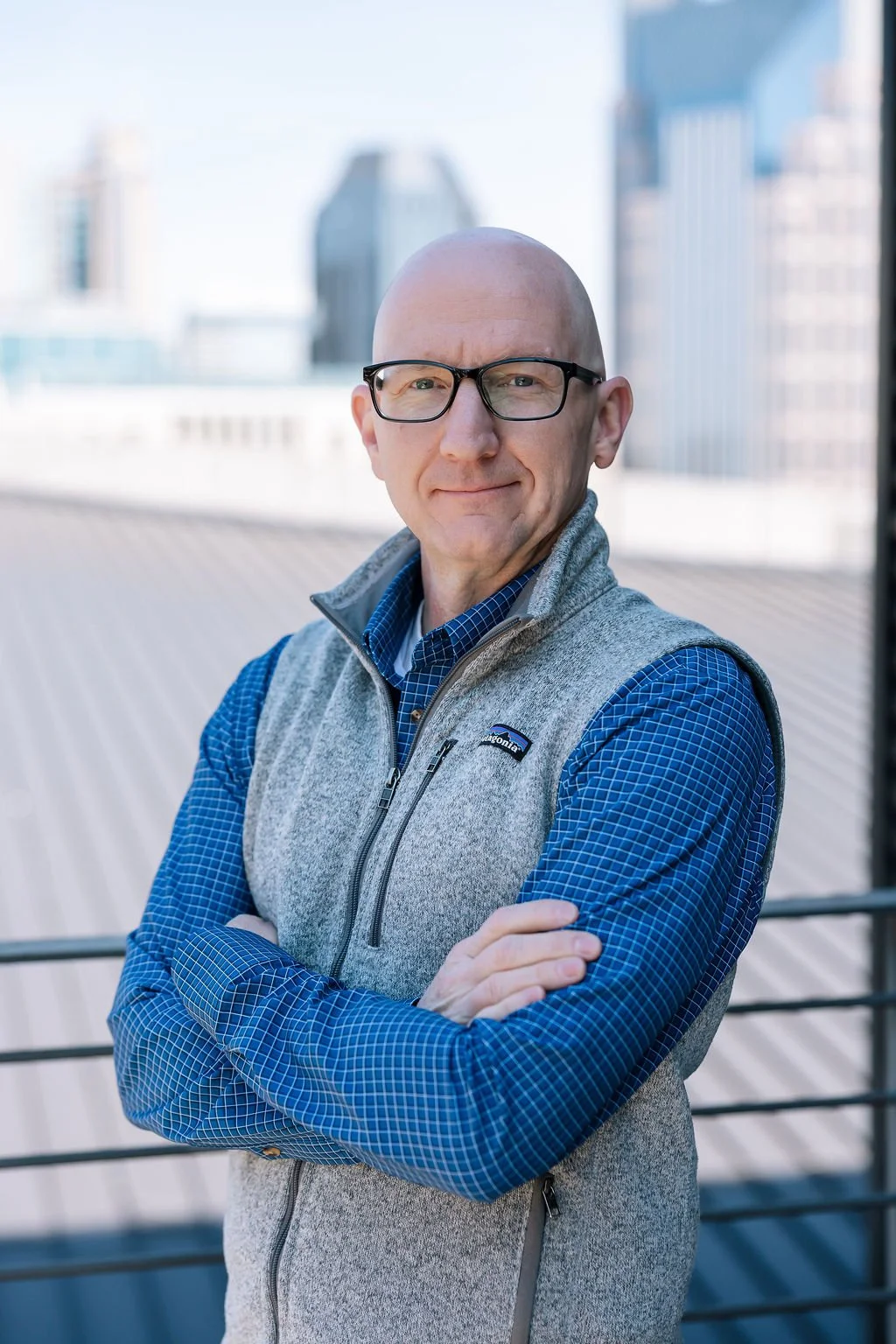
Brian Bost, MD, MPH is the founder of B2 Direct Care, a hospitalist-informed membership-based direct care practice in Denver, Colorado. He believes healthcare should work the way it was supposed to — and he's building a practice to prove it. https://b2directcare.com