Patients Matter. People Matter. - Where This Series Lands
Five posts in, here is where we land. The painting on the wall is not nostalgia. It is a thesis. And this is the practice built on it.
When I started this series in June, I told you the painting that hangs in my exam room — Sir Luke Fildes' The Doctor, 1891 — was not decoration. I told you it was a thesis.
Four months later, after walking through the Victorian cottage, the early 20th-century hospital, the antibiotic golden age, and the late-century industrialization of American medicine, I want to land the plane.
Here is what the painting argues, in plain language: a doctor's first job, before any tool or test or technology, is to know the person in front of them. Everything else medicine does is more useful when that condition is met, and less useful when it isn't.
That is not a new idea. It is, in some ways, the oldest one in the profession. It is also, in 2026, an idea that the average American patient experiences almost nowhere.
This post is about what we can do about that, in a small practice, in Denver, right now.
What Got Lost — In One Paragraph
If you read the previous four posts, you know the long version. The short version is this. Medicine left the home. Medicine became a hospital. Medicine became a science. Medicine became a specialty hierarchy. Medicine became an industry. Medicine became a billing apparatus. Medicine became an electronic health record. Each of these transitions delivered enormous gains and exacted a small, mostly unmeasured tax on the relationship between one doctor and one patient. The taxes compounded. The bill is now visible everywhere — in burnout rates, in patient satisfaction surveys, in the rising number of Americans without a primary care physician at all.
We are not going to undo any of that. Antibiotics are not coming out of the formulary. The hospital is not going away. Insurance, in some form, is here to stay.
What we can do — what some of us are doing — is build small practices outside the most damaging parts of that machinery, and prove that the older idea still works.
What Direct Primary Care Actually Is
Direct primary care, or DpC, is not a new specialty. It is not a wellness brand. It is not concierge medicine for the wealthy. It is a billing model, and the billing model has clinical consequences.
Here is the model:
You pay your physician a flat monthly fee. At B2 Direct Care, that fee is $140 a month for an individual adult ($75 for Coloradans outside the Denver metro via telemedicine). The fee covers all primary care visits — same-day, next-day, in person, telehealth, by phone, by message. No co-pays. No per-visit charges. No surprise bills.
In exchange:
- I do not bill your insurance for primary care. (You should still carry insurance, especially catastrophic coverage, for everything outside primary care.)
- I do not see 25 patients a day. I am building a practice capped at 100-150 patients at most, so that I can know you.
- I have time. A first visit with me is 60-90 minutes. Follow-up visits are 30 to 60 minutes. There is no 15-minute slot in the schedule.
- You can text or call me directly. Not a portal. Not a triage line. Me.
- Labs, imaging, and most medications are available at wholesale or near-wholesale prices — often a fraction of what insurance-routed pricing would cost.
That's the model. It is not exotic. It is what primary care looked like for most of the 20th century, before the architecture this series has been describing got built around it.
What DpC Is Not
I want to be honest about what direct care does not do, because the worst version of this story is the one that overpromises.
DpC is not insurance. You still need insurance for hospitalizations, specialty care, surgery, and high-cost imaging. If you are uninsured and considering dropping coverage to "save the membership fee," please talk to me first — this is almost never the right move.
DpC does not magic your specialist away. If you need cardiology, you need cardiology. What DpC does is give you a physician who can quarterback the referral, talk to the specialist, follow up on what they said, and make sure their plan actually lands in your real life. That role barely exists in conventional primary care anymore. It is half of what direct care actually does.
DpC does not, on its own, fix American healthcare. I have no illusion that 150 patients in Denver will change a $4.5 trillion industry. What it does do is build a practice that works for the patients it has, and offer a worked example to the physicians and patients who are looking for one.
Why I Built This
I have practiced hospital medicine for years. I am good at it. I am not leaving it.
But I have watched, over and over, the patients who landed in front of me in the hospital because something in the outpatient system failed them. The chronic condition that wasn't being managed because no one had time. The medication interaction no one caught because three different specialists were prescribing without talking. The symptom that got dismissed in a 12-minute visit and turned, six months later, into something that should have been caught.
These are not bad doctors. These are good doctors trapped in a system that does not give them the time to do their best work.
I built B2 Direct Care because I wanted to practice the kind of medicine the painting in my exam room represents — not the 19th-century version of it, but the older relational core, supported by the best of modern science. Time with the patient. Attention. Continuity. The ability to actually pick up the phone when something is wrong.
It is a small practice. By design. My hospital work shapes this practice: I bring the hospital experience to the outpatient setting — I know what happens to the patients who don't have continuous primary care, because I am the doctor who admits them. That informs how I practice outpatient.
If You Have Been Following This Series
You have stayed with me through five months of medical history and one extended argument. Thank you for that. The series was not really about Sir Luke Fildes, or the Flexner Report, or the HMO Act of 1973. It was about the trade-offs that built modern medicine, and the small, deliberate practices that are trying to recover what those trade-offs cost.
If you've been reading because you are a patient who has felt unseen by the system — I would be honored to be your doctor. The membership page is at b2directcare.com/membership. You can also book a free discovery call, where we just talk for half an hour and figure out whether this is the right fit. There is no pressure either way.
If you've been reading because you're a physician thinking about this kind of practice yourself — reach out. I am building this in public, on purpose. The next generation of direct care practices will be built faster if those of us doing it now share what we're learning.
If you've been reading because you're a friend, a family member, or one of the colleagues who has watched me build this over the past two years — the painting is hung. The office is open. The door is unlocked.
A Closing Thought
The 19th-century physician Edward Livingston Trudeau wrote a sentence that doctors still quote at each other in residency: To cure sometimes, to relieve often, to comfort always.
Modern medicine, at its best, can cure things Trudeau could not have imagined. That is the gain. We should not give it back.
But "comfort always" — the part of the practice that does not require any technology at all, only presence and time and the willingness to know a person — that is the part the architecture this series has been about has slowly priced out of the model.
You can put it back in. It costs less than five dollars a day. It looks like a doctor who picks up the phone.
It looks, in fact, a lot like the painting on the wall.
Sources & further reading:
Mangione S. "The fluff of medicine: Intangibles that make the difference." The Pharos, Summer 2025;88(3):43–47. (The source of the Trudeau quote and a beautiful short essay on what's worth preserving.)
Bazemore A, Petterson S, Peterson LE, et al. "Higher Primary Care Physician Continuity is Associated with Lower Costs and Hospitalizations." Annals of Family Medicine, 2018;16(6):492–497.
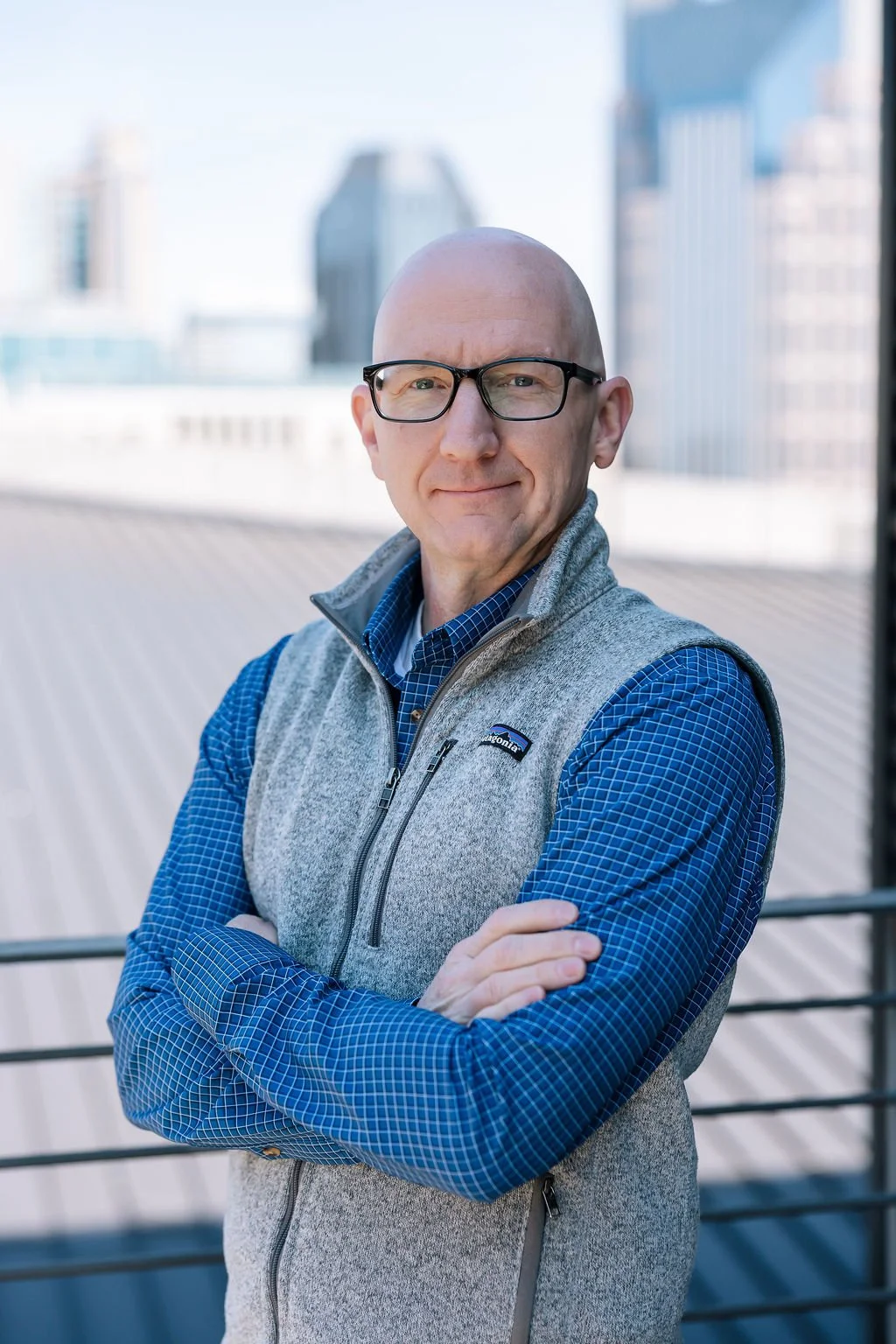
Brian Bost, MD, MPH, is a Med-Peds physician and Physician-Founder of B2 Health Solutions and its clinical practice, B2 Direct Care — a a physician-led, solo DpC micropractice in Denver, Colorado. This is Post 5, the final post, of the How Did We Get Here series. Thank you for reading.